
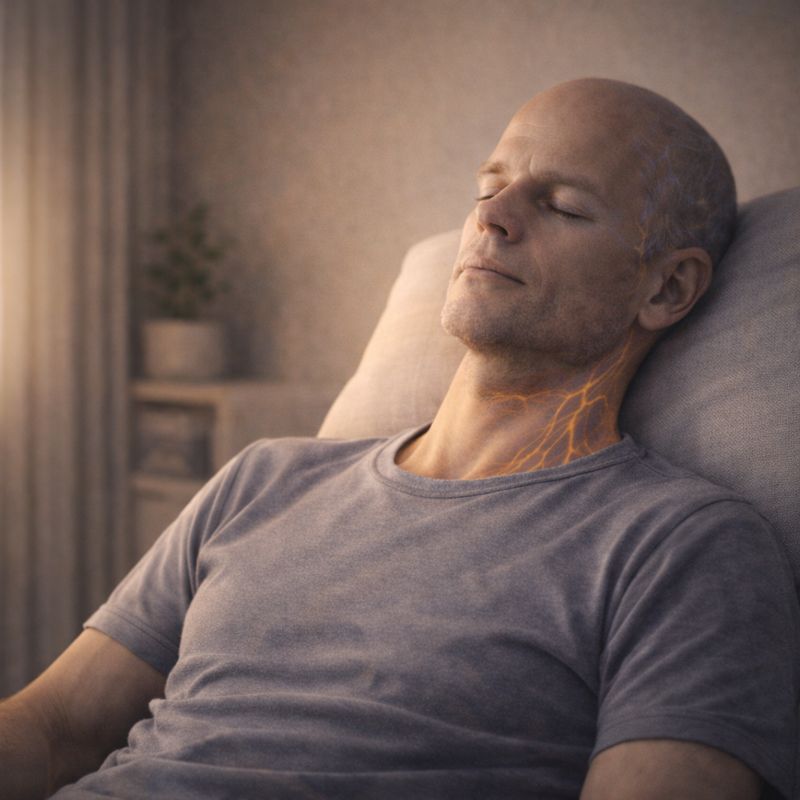
High-quality sleep depends on the body’s ability to shift into a parasympathetic state. The parasympathetic nervous system is responsible for relaxation, recovery, and restoration. When it fails to activate properly at night, sleep becomes lighter, fragmented, and less restorative — even if total sleep time appears sufficient.
This article explains how the parasympathetic nervous system influences sleep, why modern lifestyles keep it suppressed, and how parasympathetic dominance supports deep sleep and recovery.
What Is the Parasympathetic Nervous System?
The parasympathetic nervous system is one branch of the autonomic nervous system. It governs “rest and digest” functions, counterbalancing the sympathetic “fight or flight” response.
When parasympathetic activity is dominant, the body:
- Slows heart rate
- Lowers blood pressure
- Reduces cortisol output
- Enhances digestion
- Promotes tissue repair
This state is essential for sleep initiation and deep recovery.
Parasympathetic Activation and Sleep Onset
Falling asleep requires a shift from sympathetic arousal to parasympathetic dominance. This transition allows the brain and body to disengage from alertness and enter sleep.
If parasympathetic activation is insufficient:
- Sleep onset is delayed
- The body remains alert despite fatigue
- Restlessness and racing thoughts persist
Sleep cannot deepen without nervous system downregulation.
Parasympathetic Nervous System and Deep Sleep
Deep sleep is strongly associated with parasympathetic dominance. During deep sleep:
- Heart rate reaches its lowest levels
- Breathing becomes slow and rhythmic
- Stress hormone output declines
- Physical repair processes accelerate
Reduced parasympathetic activity leads to fragmented deep sleep and reduced recovery.
Sympathetic Dominance and Sleep Disruption
Modern lifestyles often maintain sympathetic activation late into the evening.
Common contributors include:
- Psychological stress
- Screen exposure
- Late-night work or stimulation
- Intense evening exercise
- Late meals or alcohol
When sympathetic activity remains high, the parasympathetic system struggles to engage, resulting in poor sleep quality.
The “Tired but Wired” Pattern
A common sign of parasympathetic dysfunction is feeling exhausted but unable to sleep deeply.
This pattern includes:
- Physical fatigue
- Mental overactivity
- Difficulty relaxing
- Light, non-restorative sleep
The nervous system remains in a defensive state even when the body needs rest.
Parasympathetic Nervous System and Heart Rate Variability
Heart rate variability (HRV) reflects the balance between sympathetic and parasympathetic activity. Higher nighttime HRV is associated with better parasympathetic dominance and improved recovery.
Low HRV during sleep often indicates:
- Chronic stress
- Poor recovery
- Insufficient deep sleep
- Nervous system overload
Improving parasympathetic activation typically improves HRV trends.
Circadian Rhythm and Parasympathetic Function
Circadian rhythm influences when parasympathetic dominance should occur. At night, circadian signals promote relaxation and recovery.
Circadian misalignment can:
- Delay parasympathetic activation
- Elevate evening cortisol
- Reduce sleep depth
Proper circadian timing supports the natural parasympathetic shift at night.
How Stress Impairs Parasympathetic Activation
Chronic stress sensitizes the nervous system and suppresses parasympathetic tone.
Effects include:
- Elevated baseline arousal
- Reduced sleep depth
- Increased nighttime awakenings
- Impaired recovery
Without adequate parasympathetic engagement, sleep becomes a shallow rest rather than true recovery.
Parasympathetic Nervous System and Sleep Quality
Sleep quality depends less on sleep duration and more on nervous system state.
Strong parasympathetic activation supports:
- Faster sleep onset
- Longer deep sleep periods
- Fewer awakenings
- More restorative sleep cycles
Weak parasympathetic tone leads to inefficient sleep.
Signs of Poor Parasympathetic Activation at Night
Common indicators include:
- Difficulty winding down
- Shallow or fragmented sleep
- Elevated nighttime heart rate
- Poor recovery despite long sleep
- Morning fatigue
These signs often point to nervous system imbalance rather than sleep deprivation.
How to Support Parasympathetic Activation for Better Sleep
Parasympathetic dominance cannot be forced, but it can be supported.
Foundational strategies include:
- Consistent sleep timing
- Reduced evening stimulation
- Stress management during the day
- Proper circadian alignment
- Creating a predictable nighttime routine
When the nervous system feels safe, parasympathetic activity increases naturally.
Parasympathetic Nervous System and Long-Term Health
Chronic suppression of parasympathetic activity is associated with:
- Poor sleep quality
- Impaired recovery
- Increased stress sensitivity
- Reduced resilience
Supporting parasympathetic function benefits both sleep and long-term health.
Final Thoughts: Parasympathetic Nervous System and Sleep
High-quality sleep requires parasympathetic dominance. Without it, sleep remains light, fragmented, and non-restorative. Many sleep problems are not caused by lack of sleep opportunity, but by an overactivated nervous system.
Improving parasympathetic activation through timing, consistency, and stress regulation is one of the most effective ways to improve deep sleep and recovery.
Continue Exploring Deep Sleep & Recovery
This article is part of the Deep Sleep & Recovery section within the Sleep Optimization framework.
Return to the main guide:
/sleep-optimization/deep-sleep-recovery/