
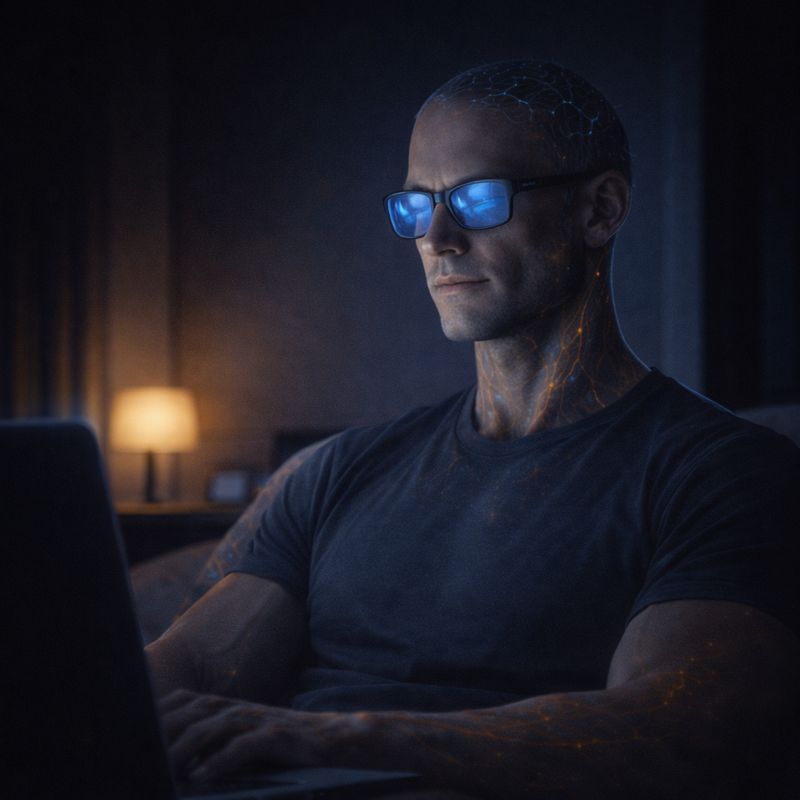
Blue light glasses are everywhere — recommended for better sleep, eye health, and circadian rhythm protection. But do they actually work, or are they just another wellness trend?
The answer depends on how, when, and which type of blue light glasses are used. This guide breaks down the science behind blue light exposure, how it affects sleep, and whether blue light glasses meaningfully improve sleep quality and circadian alignment.
What Is Blue Light and Why Does It Matter for Sleep?
Blue light is a short-wavelength, high-energy light naturally present in sunlight. During the day, blue light is beneficial — it promotes alertness, reaction time, and cognitive performance.
At night, however, blue light becomes problematic. Exposure to blue light in the evening sends a powerful signal to the brain that it is still daytime, delaying the natural rise of melatonin and shifting circadian timing.
The most common sources of nighttime blue light include:
- Smartphones and tablets
- Computer screens
- Televisions
- LED lighting
- Overhead room lights
Even relatively short exposure in the evening can impact sleep onset and sleep quality.
How Blue Light Affects Melatonin Production
Melatonin is not a sleep hormone — it is a darkness signal. When blue light enters the eyes at night, specialized photoreceptors transmit this information directly to the brain’s circadian clock, suppressing melatonin release.
This suppression can lead to:
- Difficulty falling asleep
- Delayed sleep timing
- Reduced deep sleep
- More nighttime awakenings
- Grogginess the following morning
The later the exposure and the brighter the light, the stronger the disruption.
What Are Blue Light Glasses?
Blue light glasses are designed to filter or block short-wavelength light before it reaches the eyes. They typically fall into two categories:
Clear Blue Light Glasses
These lightly filter blue light and are often marketed for daytime screen use. They offer minimal melatonin protection and are not effective for improving sleep.
Amber or Orange-Tinted Blue Light Glasses
These block a much higher percentage of blue light and are specifically designed for evening and nighttime use. These are the glasses most relevant for sleep and circadian rhythm protection.
Not all blue light glasses are equal — effectiveness depends on the wavelength blocked and the time of use.
Do Blue Light Glasses Actually Improve Sleep?
Research suggests that blue light glasses can improve sleep quality when used correctly, particularly in individuals exposed to screens or artificial lighting at night.
Potential benefits include:
- Faster sleep onset
- Earlier melatonin release
- Improved sleep efficiency
- Reduced circadian delay
However, blue light glasses are not a standalone solution. Their effectiveness is highest when combined with other circadian-friendly habits.
When Blue Light Glasses Work Best
Blue light glasses are most effective when:
- Worn 1–3 hours before bedtime
- Used consistently every evening
- Combined with reduced screen brightness
- Paired with warm, dim ambient lighting
They are particularly helpful for:
- Evening screen users
- Shift workers
- People with delayed sleep schedules
- Individuals sensitive to artificial light
When Blue Light Glasses Do NOT Work Well
Blue light glasses are far less effective when:
- Used during the day
- Worn inconsistently
- Combined with bright overhead lighting
- Used while continuing stimulating nighttime activities
They cannot compensate for poor sleep habits or excessive nighttime light exposure.
Blue Light Glasses vs Red Light and Darkness
While blue light glasses reduce exposure, darkness remains the most powerful circadian signal. Red or amber lighting and dark sleep environments often provide stronger benefits than glasses alone.
An optimal evening setup includes:
- Dim, warm lighting
- Reduced screen use
- Blue light glasses if screens are unavoidable
- Complete darkness during sleep
Blue light glasses are best viewed as a support tool, not a cure.
Are Blue Light Glasses Safe?
Blue light glasses are generally safe when used appropriately in the evening. They should not be worn during the day, as daytime blue light is important for circadian alignment, mood, and alertness.
Blocking blue light too early or too often during the day can negatively affect circadian rhythm.
Do You Need Blue Light Glasses for Better Sleep?
You may benefit from blue light glasses if:
- You use screens late in the evening
- You struggle to fall asleep despite adequate sleep time
- You have a delayed sleep schedule
- You live in environments with excessive artificial lighting
If your evening environment is already dark and screen-free, blue light glasses may offer little additional benefit.
How Blue Light Glasses Fit Into Circadian Optimization
Blue light glasses are one part of a larger circadian system. Their impact is amplified when combined with:
- Morning sunlight exposure
- Consistent sleep and wake times
- Proper bedroom lighting
- Reduced nighttime stimulation
Circadian rhythm responds to patterns, not single interventions.
Final Verdict: Do Blue Light Glasses Actually Work?
Yes — blue light glasses can work, but only when used correctly and for the right reasons. They are most effective as part of a broader strategy to reduce nighttime light exposure and support natural melatonin release.
Used intelligently, they can be a valuable tool for improving sleep quality and circadian alignment.
Continue Exploring Circadian Rhythm Optimization
This article is part of the Circadian Rhythm series within the Sleep Optimization framework.
Continue learning about circadian rhythm
TOPIC RELATED: