
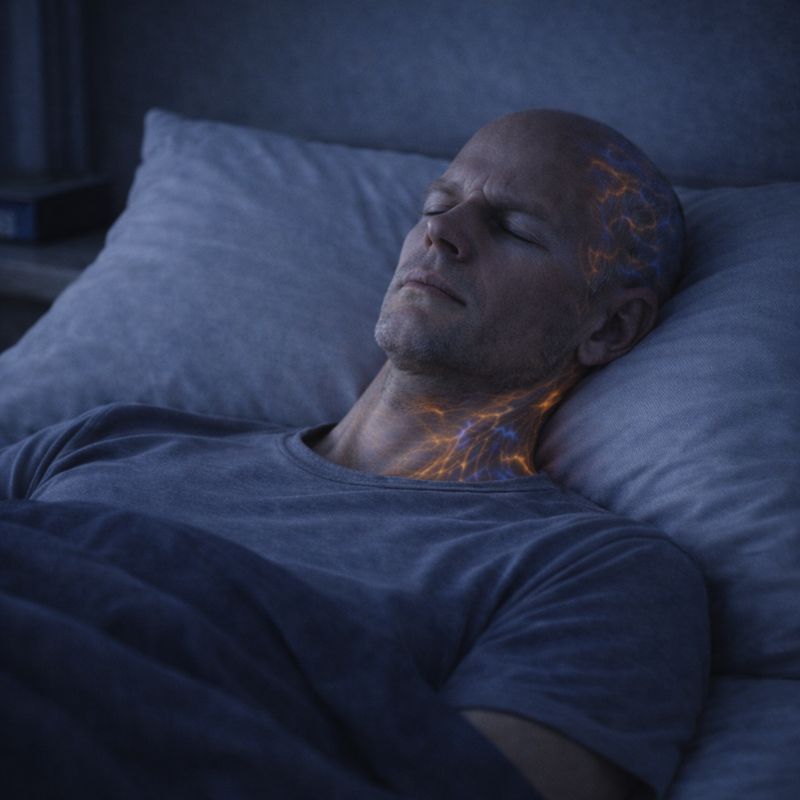
An overactive nervous system is one of the most common hidden causes of poor sleep. Many people struggle with light, fragmented, or non-restorative sleep not because they lack sleep opportunity, but because their nervous system remains in a state of constant alertness.
This article explains how an overactive nervous system disrupts sleep, why it prevents deep recovery, and how chronic hyperarousal leads to ongoing sleep problems even when sleep habits appear correct.
What Does an Overactive Nervous System Mean?
An overactive nervous system refers to persistent dominance of the sympathetic “fight or flight” response. Instead of shifting into a relaxed, parasympathetic state at night, the body remains alert, reactive, and defensive.
This state is characterized by:
- Elevated baseline arousal
- Increased stress hormone output
- Difficulty relaxing
- Heightened sensory sensitivity
Sleep requires downregulation. An overactive nervous system prevents this transition.
How the Nervous System Controls Sleep
Sleep onset and depth depend on a balance between the sympathetic and parasympathetic nervous systems.
Healthy sleep requires:
- Reduced sympathetic activity
- Increased parasympathetic dominance
- Lower heart rate and breathing rate
- Decreased cortisol and adrenaline
When the nervous system fails to shift gears, sleep remains shallow and unstable.
Why Hyperarousal Disrupts Sleep Onset
Falling asleep is not a passive process. It requires the brain and body to feel safe enough to disengage from alertness.
An overactive nervous system causes:
- Racing thoughts
- Physical restlessness
- Heightened awareness
- Difficulty letting go of the day
Even when exhausted, the body resists sleep if it perceives threat or stress.
Overactive Nervous System and Deep Sleep Suppression
Deep sleep only occurs when parasympathetic dominance is strong.
When the nervous system is overactive:
- Deep sleep periods shorten
- Sleep cycles fragment
- Micro-awakenings increase
- Physical recovery is impaired
The body never fully enters its most restorative state.
The “Tired but Wired” Sleep Pattern
A hallmark of nervous system overactivation is feeling exhausted yet unable to sleep deeply.
This pattern includes:
- High fatigue
- Elevated alertness
- Difficulty winding down
- Light, non-restorative sleep
Sleep pressure is present, but nervous system arousal blocks recovery.
Stress as the Primary Driver of Nervous System Overactivation
Chronic stress is the most common cause of nervous system hyperarousal.
Sources include:
- Psychological stress
- Emotional load
- Work pressure
- Cognitive overstimulation
- Unresolved anxiety
Even low-grade, ongoing stress keeps the nervous system activated long after bedtime.
Physical Stress and Nervous System Load
Physical stress contributes to nervous system overactivation in the same way as mental stress.
Examples include:
- Overtraining
- Lack of recovery days
- Illness or inflammation
- Chronic pain
- Sleep deprivation
Total stress load determines nervous system state, not stress type.
Overactive Nervous System and Nighttime Awakenings
Hyperarousal often leads to frequent nighttime awakenings.
These awakenings may be brief and unnoticed, but they:
- Fragment sleep cycles
- Reduce deep sleep efficiency
- Prevent full recovery
The body remains vigilant, scanning for threats instead of resting.
Elevated Nighttime Heart Rate and Sleep Quality
An overactive nervous system is often reflected in elevated nighttime heart rate.
This indicates:
- Persistent sympathetic activation
- Reduced parasympathetic tone
- Poor recovery environment
Lower nighttime heart rate is associated with deeper, more restorative sleep.
Circadian Misalignment Makes Hyperarousal Worse
Circadian rhythm normally supports nervous system downregulation at night.
Circadian disruption caused by:
- Irregular sleep schedules
- Late bedtimes
- Evening light exposure
- Shift work
delays parasympathetic activation and amplifies nervous system overactivity.
Why Poor Sleep Reinforces Nervous System Overactivation
Poor sleep itself is a stressor.
Chronic sleep disruption:
- Increases stress hormone output
- Lowers stress tolerance
- Sensitizes the nervous system
This creates a feedback loop where poor sleep and hyperarousal reinforce each other.
Signs an Overactive Nervous System Is Affecting Your Sleep
Common indicators include:
- Difficulty winding down at night
- Light or fragmented sleep
- Waking up tense or alert
- Elevated nighttime heart rate
- Poor recovery despite adequate sleep time
These signs often persist until nervous system balance is restored.
Why You Can’t “Force” Sleep With an Overactive Nervous System
Sleep cannot be forced through willpower.
When the nervous system is overactive:
- Trying harder to sleep increases frustration
- Frustration increases arousal
- Arousal further blocks sleep
Reducing nervous system activation is more effective than trying to sleep harder.
Supporting Nervous System Downregulation for Better Sleep
Improving sleep in this context requires addressing nervous system state, not just sleep habits.
Foundational principles include:
- Reducing total daily stress load
- Supporting circadian alignment
- Avoiding late stimulation
- Creating predictability and safety
- Allowing adequate recovery time
When the nervous system feels safe, sleep depth improves naturally.
Long-Term Effects of Chronic Nervous System Overactivation
If left unaddressed, chronic hyperarousal can lead to:
- Persistent sleep problems
- Reduced physical recovery
- Emotional dysregulation
- Increased fatigue and burnout
- Lower resilience
Restoring nervous system balance is essential for long-term sleep health.
Final Thoughts: Overactive Nervous System and Poor Sleep
An overactive nervous system is a major driver of poor sleep quality. Hyperarousal prevents parasympathetic dominance, suppresses deep sleep, and fragments recovery — even when sleep duration appears adequate.
Improving sleep in these cases requires calming the nervous system and restoring circadian support, not simply spending more time in bed. When nervous system activation decreases, sleep depth, recovery, and resilience improve naturally.
Continue Exploring Deep Sleep & Recovery
This article is part of the Deep Sleep & Recovery section within the Sleep Optimization framework.
Return to the main guide:
/sleep-optimization/deep-sleep-recovery/