
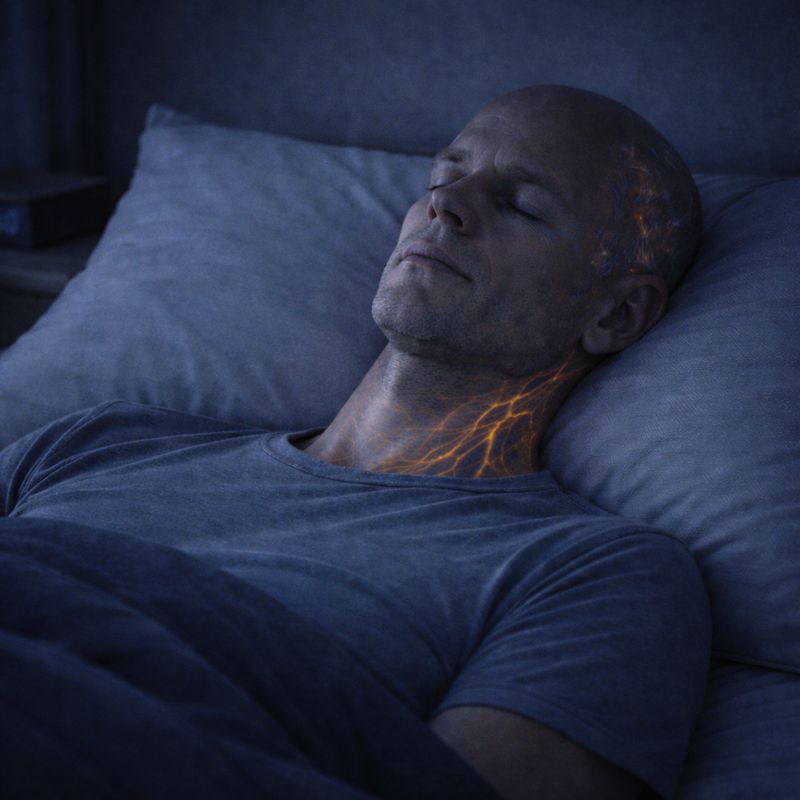
Stress is one of the most powerful blockers of deep sleep. You can have enough time in bed, a quiet environment, and good sleep habits — yet still wake up unrefreshed. In many cases, the reason is not poor sleep opportunity, but an overactivated stress response that prevents the body from entering deep, restorative sleep.
This article explains how stress blocks deep sleep, what happens inside the nervous system, and why managing stress is essential for true physical recovery.
Why Deep Sleep Requires a Calm Nervous System
Deep sleep occurs only when the body feels safe enough to fully downshift. This state depends on parasympathetic nervous system dominance, which allows heart rate, breathing, and stress hormone levels to fall.
Stress activates the sympathetic nervous system, keeping the body alert and defensive. When this activation persists into the evening, the nervous system cannot fully disengage, and deep sleep is reduced or fragmented.
The Stress Response and Sleep Physiology
Stress triggers the release of cortisol and adrenaline. These hormones are useful during the day, but they directly interfere with nighttime recovery.
When stress hormones remain elevated at night:
- Sleep onset is delayed
- Sleep becomes lighter
- Deep sleep periods shorten
- Nighttime awakenings increase
Deep sleep is incompatible with a state of vigilance.
Cortisol and Its Impact on Deep Sleep
Cortisol follows a circadian rhythm, peaking in the morning and reaching its lowest levels at night. Chronic stress disrupts this pattern.
Elevated evening cortisol:
- Suppresses deep sleep
- Increases nighttime arousal
- Reduces sleep efficiency
- Promotes the “tired but wired” feeling
Even moderate stress can flatten the normal cortisol rhythm and impair deep sleep quality.
Mental Stress vs Physical Stress
Not all stress is psychological. Both mental and physical stress can block deep sleep.
Common sources include:
- Work or emotional stress
- Cognitive overload
- Overtraining or excessive exercise
- Illness or inflammation
- Sleep deprivation itself
The nervous system does not distinguish between stress types — it responds to total load.
Stress-Induced Sleep Fragmentation
Stress often causes micro-awakenings that prevent stable deep sleep cycles.
You may not fully wake up, but your sleep becomes:
- Light and easily disturbed
- Fragmented across the night
- Inefficient for recovery
These interruptions reduce time spent in deep sleep even when total sleep duration looks normal.
Why You Can Be Exhausted but Still Not Sleep Deeply
One of the most frustrating stress-related sleep patterns is extreme fatigue combined with poor sleep depth.
This happens because:
- Sleep pressure is high
- Nervous system arousal is also high
The body wants to sleep, but the stress response prevents full parasympathetic engagement. Deep sleep requires both fatigue and relaxation.
Chronic Stress and Long-Term Deep Sleep Loss
When stress becomes chronic, deep sleep loss often becomes persistent.
Long-term effects include:
- Reduced growth hormone release
- Poor physical recovery
- Increased inflammation
- Weakened immune function
- Heightened stress sensitivity
This creates a cycle where poor deep sleep increases stress, which further reduces deep sleep.
Stress, Anxiety, and Deep Sleep
Anxiety is particularly disruptive to deep sleep due to sustained hyperarousal.
Common patterns include:
- Difficulty winding down at night
- Racing thoughts
- Elevated nighttime heart rate
- Light, non-restorative sleep
Without calming the nervous system, deep sleep remains limited regardless of sleep duration.
Circadian Misalignment Amplifies Stress Effects
Stress has a stronger impact on deep sleep when circadian rhythm is disrupted.
Late bedtimes, irregular schedules, and evening light exposure:
- Delay parasympathetic activation
- Sustain cortisol release
- Reduce deep sleep efficiency
Circadian alignment helps buffer the nervous system against stress.
How Stress Blocks Growth Hormone Release
Growth hormone is primarily released during deep sleep. Stress suppresses this release by:
- Reducing deep sleep duration
- Interrupting deep sleep cycles
- Elevating cortisol, which opposes growth hormone
This directly impairs tissue repair and physical recovery.
Signs Stress Is Blocking Your Deep Sleep
Common indicators include:
- Sleeping long hours without feeling restored
- Waking up tense or sore
- Frequent nighttime awakenings
- Elevated nighttime heart rate
- Poor recovery from physical activity
These signs often persist until stress load is reduced.
Why You Can’t “Force” Deep Sleep Under Stress
Deep sleep cannot be achieved through willpower. Forcing sleep while stressed often increases frustration and arousal.
The nervous system must feel safe, calm, and predictable before deep sleep can occur. Removing stressors and reducing activation is more effective than trying to sleep harder.
Reducing Stress to Restore Deep Sleep
Deep sleep improves when stress load is reduced across the day, not just at bedtime.
Key principles include:
- Managing daytime stress
- Avoiding late cognitive or emotional stimulation
- Supporting circadian alignment
- Allowing sufficient wind-down time
- Creating predictability in sleep timing
Deep sleep returns naturally when the nervous system is no longer in defense mode.
Final Thoughts: How Stress Blocks Deep Sleep
Stress blocks deep sleep by keeping the nervous system in a state of alertness that is incompatible with physical recovery. Elevated cortisol, sympathetic activation, and mental arousal fragment sleep and suppress deep restorative stages.
Improving deep sleep is not about sleeping longer — it is about reducing stress and restoring nervous system balance. When stress is managed and circadian rhythm is aligned, deep sleep follows naturally.
Continue Exploring Deep Sleep & Recovery
This article is part of the Deep Sleep & Recovery section within the Sleep Optimization framework.
Return to the main guide:
/sleep-optimization/deep-sleep-recovery/