
Sleeping late has become common in modern life — work schedules, screens, and social habits often push bedtime far beyond sunset. But does going to bed late actually ruin your circadian rhythm, or is it only a problem if sleep duration is reduced?
The answer is more nuanced than “late is bad.” What matters most is consistency, light exposure, and alignment with your internal clock. This article explains how late bedtimes affect circadian rhythm, when they become harmful, and how to protect sleep quality even with a delayed schedule.
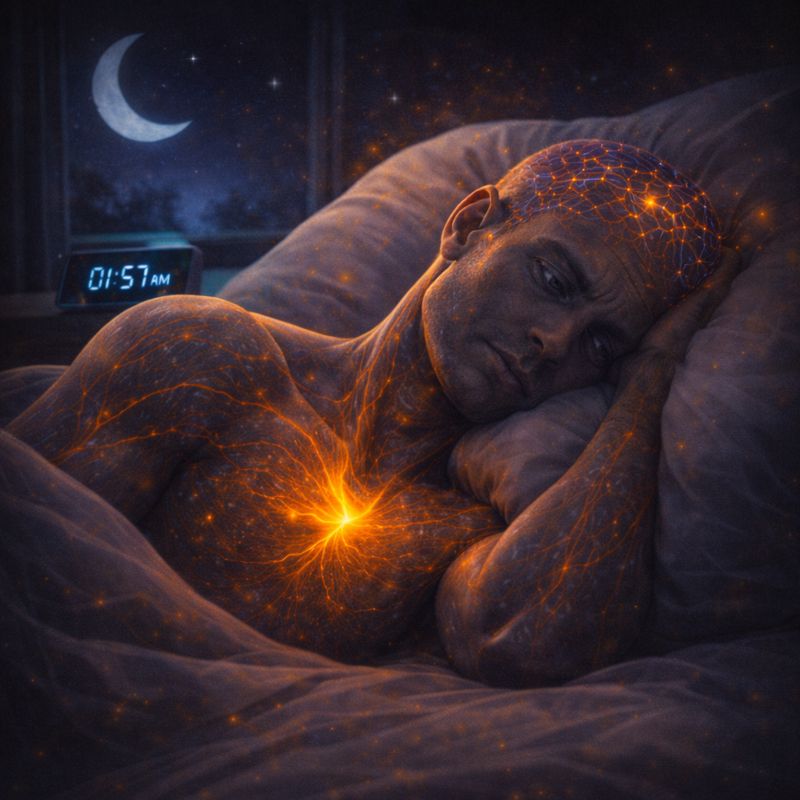
How Circadian Rhythm Responds to Sleep Timing
Circadian rhythm is your body’s internal 24-hour clock that regulates sleep, hormone release, body temperature, and energy levels. It is not controlled by bedtime alone, but by repeated daily signals such as light exposure, wake-up time, and activity patterns.
When sleep timing is stable, the circadian system adapts. When sleep timing is irregular or misaligned with environmental cues, circadian rhythm becomes disrupted.
Sleeping late does not automatically damage circadian rhythm — sleeping late inconsistently does.
When Sleeping Late Disrupts Circadian Rhythm
Late bedtimes are more likely to disrupt circadian rhythm when they are associated with:
- Irregular sleep and wake times
- Exposure to bright or blue light late at night
- Delayed wake-up times that vary day to day
- Reduced morning light exposure
- Social jet lag between weekdays and weekends
In these cases, melatonin release shifts later, sleep onset becomes harder, and sleep quality often declines even if total sleep time appears sufficient.
Sleeping Late vs Delayed Sleep Phase
Some people naturally fall asleep later due to chronotype. This is different from circadian disruption.
- Delayed sleep phase is a stable, biologically driven pattern
- Circadian disruption is irregular and unstable
A late but consistent sleep schedule can still support good sleep quality if light exposure and wake-up time are properly aligned.
Problems arise when bedtime drifts later without consistency or structure.
The Role of Light Exposure in Late Bedtimes
Light is the strongest regulator of circadian rhythm. Late-night exposure to artificial light, especially from screens and overhead lighting, sends a powerful “daytime” signal to the brain.
When sleeping late is paired with:
- Screen use before bed
- Bright indoor lighting
- Lack of morning sunlight
Circadian rhythm shifts later and becomes weaker over time.
Late bedtime combined with late-night light exposure is far more disruptive than bedtime alone.
Does Sleeping Late Reduce Sleep Quality?
Sleeping late often reduces sleep quality indirectly by:
- Shortening sleep duration due to early obligations
- Increasing sleep fragmentation
- Reducing deep sleep consistency
- Increasing morning grogginess
If sleep duration remains adequate and timing is consistent, sleep quality may remain relatively intact. However, most late sleepers experience hidden sleep debt due to social and work constraints.
Wake-Up Time Matters More Than Bedtime
Circadian rhythm is anchored primarily by wake-up time, not bedtime. A stable wake-up time reinforces melatonin timing, sleep pressure, and hormonal rhythms.
Sleeping late while maintaining a consistent wake-up time can temporarily reduce sleep duration but often leads to earlier sleep onset over time as circadian rhythm realigns.
Allowing wake-up time to drift later is what weakens circadian stability.
Sleeping Late and Social Jet Lag
Many people sleep late on weekends and wake early during the week. This creates social jet lag — a form of circadian misalignment similar to traveling across time zones.
Social jet lag is associated with:
- Poor sleep quality
- Reduced daytime performance
- Increased fatigue and mood disruption
Keeping weekend wake-up time within one hour of weekdays significantly reduces circadian stress.
Can You Sleep Late Without Ruining Circadian Rhythm?
Yes — if certain conditions are met:
- Bedtime and wake-up time are consistent
- Morning light exposure is prioritized
- Evening light exposure is controlled
- Sleep duration remains sufficient
Circadian rhythm adapts to patterns. Stability matters more than the clock time itself.
How to Protect Circadian Rhythm If You Sleep Late
If a late bedtime is unavoidable:
- Fix wake-up time first
- Get bright light exposure early after waking
- Dim lights aggressively in the evening
- Avoid screens late at night
- Maintain consistent daily timing
These steps help preserve circadian alignment even with delayed sleep schedules.
Final Answer: Does Sleeping Late Ruin Your Circadian Rhythm?
Sleeping late does not automatically ruin circadian rhythm. Irregular timing, late-night light exposure, and inconsistent wake-up times do.
Circadian rhythm responds to consistency and environmental signals, not moral rules about bedtime. A stable, well-aligned schedule — even if late — can support healthy sleep when managed correctly.
Continue Exploring Circadian Rhythm Optimization
This article is part of the Circadian Rhythm series within the Sleep Optimization framework.
Return to the main guide:
/sleep-optimization/circadian-rhythm/