
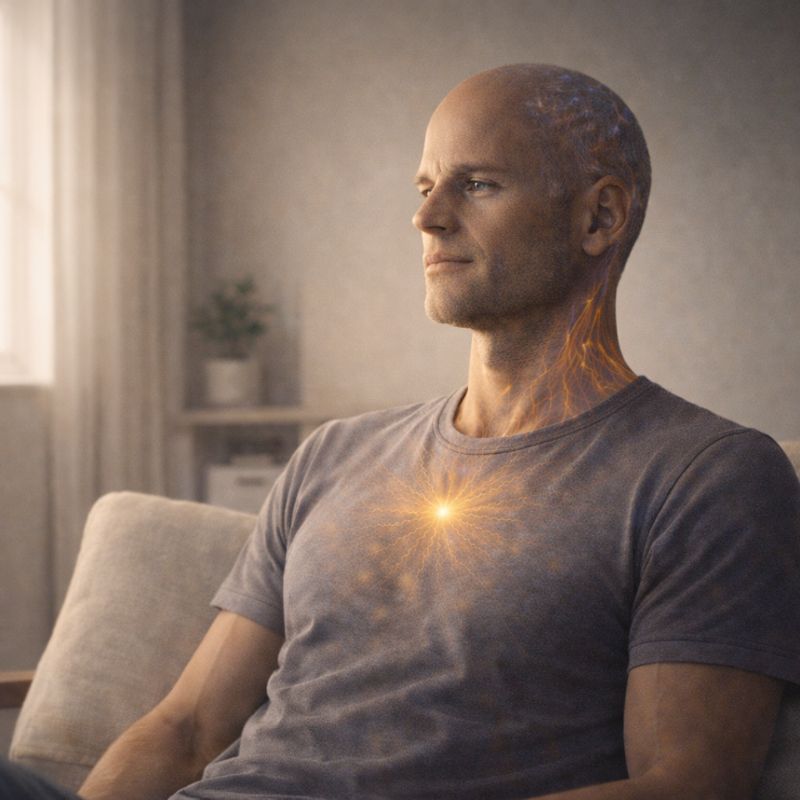
Circadian rhythm plays a foundational role in mental health. While mental health is often discussed in terms of psychology, neurotransmitters, or stress, one of the most powerful regulators of mood, emotional stability, and cognitive resilience is the timing of sleep, light exposure, and daily routines.
Disruption of circadian rhythm is strongly linked to anxiety, depression, mood instability, and cognitive impairment. This article explains how circadian rhythm influences mental health and why restoring circadian alignment often improves psychological well-being.
How Circadian Rhythm Regulates the Brain
Circadian rhythm coordinates the timing of neurotransmitter release, hormone production, neural plasticity, and emotional regulation. The brain relies on predictable cycles of wakefulness and sleep to maintain balance.
Key brain processes regulated by circadian rhythm include:
- Serotonin and dopamine signaling
- Cortisol and stress response
- Emotional processing
- Memory consolidation
- Cognitive performance
When circadian rhythm is stable, the brain operates efficiently. When it is disrupted, mental health symptoms often emerge.
Circadian Disruption and Mood Disorders
Circadian rhythm disruption is strongly associated with mood disorders. Research consistently links irregular sleep timing, delayed sleep phase, and light misalignment with increased risk of depression and anxiety.
Common circadian-related patterns include:
- Late bedtimes and wake times
- Irregular sleep schedules
- Reduced morning light exposure
- Excessive evening light exposure
These patterns weaken circadian signaling and destabilize mood regulation.
Depression and Circadian Rhythm
Depression is frequently associated with circadian misalignment. Many individuals with depression show altered circadian timing, reduced rhythm amplitude, and blunted hormonal cycles.
Circadian disruption in depression often includes:
- Flattened cortisol rhythm
- Reduced melatonin production
- Fragmented sleep
- Early morning or late-night awakenings
Improving circadian alignment is associated with improvements in mood and emotional stability.
Anxiety, Hyperarousal, and Circadian Rhythm
Anxiety is closely linked to circadian disruption and elevated nighttime arousal. When circadian rhythm is misaligned, the nervous system struggles to shift into a relaxed state at night.
Circadian-related anxiety patterns include:
- Elevated evening cortisol
- Difficulty winding down
- Racing thoughts at night
- Poor sleep quality
Restoring circadian timing helps rebalance the nervous system and reduce hyperarousal.
Circadian Rhythm and Emotional Regulation
Emotional regulation depends on stable sleep–wake cycles. Circadian rhythm influences how the brain processes emotional stimuli and recovers from stress.
Circadian misalignment impairs:
- Emotional resilience
- Stress tolerance
- Impulse control
- Mood stability
This can lead to irritability, mood swings, and reduced emotional control.
Bipolar Disorder and Circadian Instability
Circadian rhythm instability is a key feature of bipolar disorder. Changes in sleep timing often precede mood episodes.
Circadian factors linked to bipolar mood shifts include:
- Irregular sleep schedules
- Reduced sleep duration
- Disrupted light exposure patterns
Maintaining strict circadian consistency is often emphasized in bipolar disorder management.
Circadian Rhythm, Sleep Quality, and Mental Health
Sleep quality is one of the strongest mediators between circadian rhythm and mental health. Poor circadian alignment reduces sleep depth and consistency, which directly affects mood and cognition.
Chronic poor sleep increases risk of:
- Depression
- Anxiety disorders
- Emotional dysregulation
- Cognitive fatigue
Improving sleep timing often produces noticeable mental health benefits.
Light Exposure and Mental Health
Light exposure is a powerful regulator of circadian rhythm and mental health.
Key effects include:
- Morning light improves mood and alertness
- Evening light delays circadian timing
- Artificial light at night worsens mood symptoms
Reduced daylight exposure is associated with increased depressive symptoms and seasonal mood disturbances.
Social Rhythm and Psychological Stability
Daily routines act as circadian stabilizers. Irregular social schedules weaken circadian rhythm and emotional regulation.
Stable routines support mental health by reinforcing:
- Predictable sleep timing
- Regular activity patterns
- Consistent energy levels
This concept is often referred to as social rhythm stability.
Stress, Circadian Rhythm, and Mental Health
Circadian rhythm and stress regulation are deeply interconnected. Circadian disruption increases stress sensitivity and reduces stress recovery.
This leads to:
- Elevated baseline stress
- Poor emotional recovery
- Increased vulnerability to anxiety and burnout
Circadian alignment improves stress resilience and emotional balance.
How to Support Mental Health Through Circadian Alignment
Supporting mental health through circadian rhythm focuses on consistency rather than intensity.
Effective strategies include:
- Fixing wake-up time daily
- Prioritizing morning light exposure
- Reducing evening light
- Maintaining consistent sleep schedules
- Avoiding late stimulants and alcohol
- Creating predictable daily routines
These habits support both circadian rhythm and psychological stability.
Can Circadian Alignment Improve Mental Health?
Circadian optimization is not a replacement for clinical treatment when mental health disorders are present. However, circadian alignment often enhances treatment outcomes and improves baseline mood and resilience.
Many individuals experience:
- Improved emotional stability
- Reduced anxiety symptoms
- Better stress tolerance
- Improved cognitive clarity
Circadian rhythm is a foundational layer of mental health.
Final Thoughts: Circadian Rhythm and Mental Health
Circadian rhythm plays a central role in emotional regulation, mood stability, and mental resilience. Disrupted circadian timing weakens neurotransmitter balance, sleep quality, and stress regulation, increasing vulnerability to mental health issues.
By aligning sleep, light exposure, and daily routines with circadian biology, mental well-being can improve naturally and sustainably.
Continue Exploring Circadian Rhythm Optimization
This article is part of the Circadian Rhythm series within the Sleep Optimization framework.
Return to the main guide:
/sleep-optimization/circadian-rhythm/