
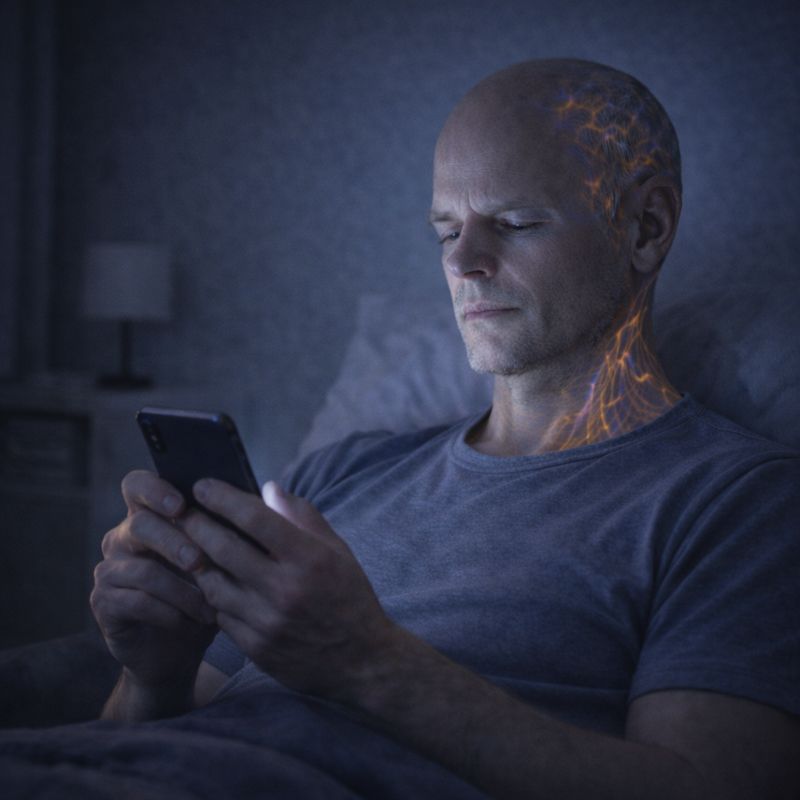
Late-night screen use is one of the most common and underestimated disruptors of deep sleep. Even when total sleep time appears sufficient, screens used in the evening can significantly reduce sleep depth, fragment recovery, and leave you waking up unrefreshed.
This article explains how late-night screen use affects deep sleep, why the impact goes beyond blue light alone, and how screens interfere with nervous system downregulation and circadian timing.
Why Deep Sleep Is Sensitive to Evening Stimulation
Deep sleep requires a calm nervous system and strong parasympathetic dominance. Anything that maintains alertness late at night interferes with this process.
Screens provide:
- Cognitive stimulation
- Emotional engagement
- Sensory input
- Circadian-disrupting light
Together, these signals delay the body’s transition into recovery mode.
Blue Light and Circadian Disruption
Screens emit blue-enriched light, which strongly affects circadian rhythm.
Evening blue light exposure:
- Suppresses melatonin production
- Delays circadian timing
- Shifts sleep onset later
- Reduces early-night deep sleep
Deep sleep is most abundant early in the night, so circadian delays disproportionately reduce deep sleep quantity.
Why Screen Content Matters as Much as Light
The impact of screens is not limited to light exposure.
Engaging content causes:
- Increased cognitive arousal
- Emotional activation
- Elevated sympathetic nervous system activity
Even low-brightness screens can disrupt deep sleep if the content keeps the brain alert and reactive.
Screens and Nervous System Activation
Late-night screen use keeps the nervous system in a sympathetic state.
Effects include:
- Elevated heart rate
- Reduced parasympathetic activation
- Difficulty relaxing at bedtime
- Shallow, fragmented sleep
Deep sleep requires the nervous system to feel safe and disengaged.
The “Scroll Trap” and Sleep Fragmentation
Many people underestimate how much time screens add to their evening.
Endless scrolling:
- Extends stimulation longer than intended
- Delays sleep onset
- Increases sleep fragmentation
- Reduces total deep sleep
The nervous system never fully transitions into recovery mode.
Screens and Delayed Sleep Onset
Late-night screen use often leads to:
- Difficulty falling asleep
- Shortened sleep opportunity
- Reduced early-night deep sleep
Even small delays in sleep onset can significantly reduce deep sleep duration.
Screens, Stress, and Cortisol
Engaging or emotionally charged content can elevate cortisol levels.
Elevated evening cortisol:
- Suppresses deep sleep
- Increases nighttime awakenings
- Produces the “tired but wired” feeling
This effect is independent of screen brightness.
Why Night Mode and Blue Light Filters Aren’t Enough
Night mode and blue light filters reduce light intensity but do not eliminate stimulation.
They do not address:
- Cognitive engagement
- Emotional arousal
- Habitual scrolling behavior
Sleep quality often remains impaired even with filtered screens.
Late Night Screen Use and Sleep Cycles
Deep sleep occurs primarily in the first half of the night.
Late-night screen use:
- Pushes sleep cycles later
- Shortens deep sleep windows
- Increases light sleep proportion
This results in reduced physical recovery despite adequate total sleep time.
Screens and Nighttime Awakenings
Even after falling asleep, late-night screen use can affect sleep continuity.
Common effects include:
- More frequent awakenings
- Lighter sleep stages
- Reduced deep sleep stability
The nervous system remains more reactive during the night.
Individual Sensitivity to Screens
Sensitivity to late-night screen use varies.
Factors that increase sensitivity include:
- High baseline stress
- Anxiety
- Circadian vulnerability
- Existing sleep debt
Some people experience significant deep sleep disruption from minimal screen exposure.
Signs Screen Use Is Reducing Your Deep Sleep
Common indicators include:
- Difficulty falling asleep after screen use
- Feeling unrefreshed despite long sleep
- Reduced deep sleep on trackers
- Elevated nighttime heart rate
Patterns over time matter more than single nights.
Why Deep Sleep Suffers More Than REM Sleep
Deep sleep is more sensitive to arousal than REM sleep.
Late-night screens tend to:
- Reduce deep sleep duration
- Increase light sleep
- Shift REM sleep later into the night
This creates physical fatigue even when mental processing appears intact.
Reducing Screen Impact on Deep Sleep
Improving deep sleep requires reducing both light exposure and stimulation.
Key principles include:
- Ending screen use earlier in the evening
- Creating a clear screen cut-off time
- Avoiding emotionally engaging content at night
- Supporting circadian downshifting
Deep sleep improves when the nervous system can disengage before bed.
Final Thoughts: Late Night Screen Use and Deep Sleep
Late-night screen use disrupts deep sleep by delaying circadian timing, activating the nervous system, and suppressing parasympathetic dominance. The result is lighter, less restorative sleep even when total sleep time appears sufficient.
Protecting deep sleep requires more than dimming screens — it requires creating space for the nervous system to downshift. When screens are reduced in the evening, deep sleep returns naturally and recovery improves.
Continue Exploring Deep Sleep & Recovery
This article is part of the Deep Sleep & Recovery section within the Sleep Optimization framework.
Return to the main guide:
/sleep-optimization/deep-sleep-recovery/