
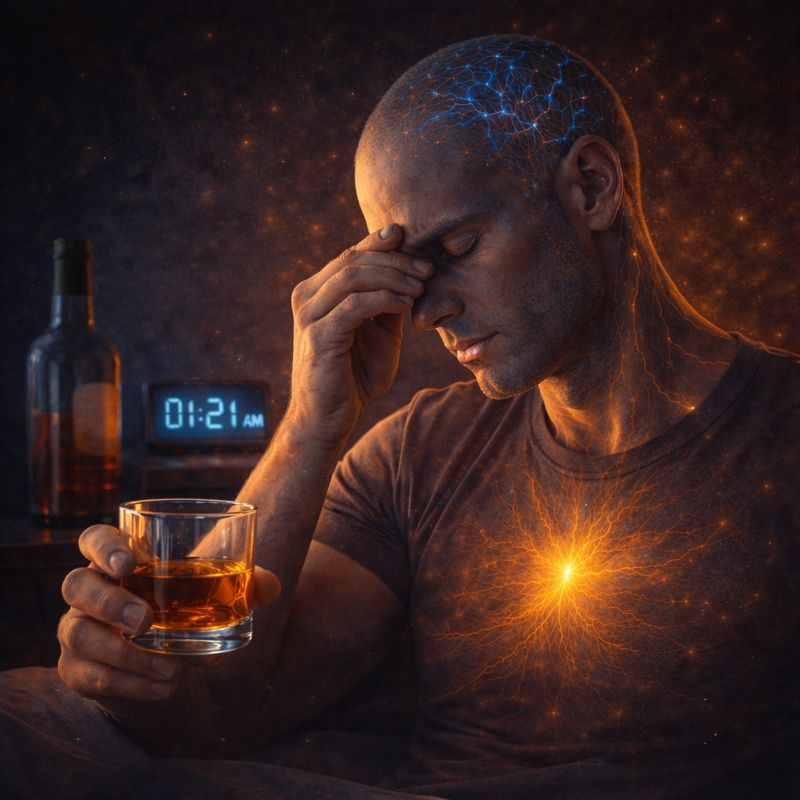
Alcohol is often associated with relaxation and faster sleep onset, but its effects on sleep and circadian rhythm are far more disruptive than most people realize. While alcohol may help you fall asleep initially, it significantly impairs sleep quality, circadian alignment, and nighttime recovery.
This article explains how alcohol affects circadian rhythm, why sleep feels worse after drinking, and how timing and quantity influence its impact on sleep quality.
Alcohol and the Circadian System
Circadian rhythm regulates sleep timing, hormone release, body temperature, and energy levels over a roughly 24-hour cycle. It relies on consistent signals such as light exposure, sleep timing, and internal physiological cues.
Alcohol interferes with these signals by altering neurotransmitter activity, suppressing melatonin production, and fragmenting sleep architecture. The result is sleep that may feel deep at first but becomes increasingly disrupted throughout the night.
Why Alcohol Makes You Fall Asleep Faster
Alcohol has sedative effects due to its impact on the GABA neurotransmitter system. This increases relaxation and reduces sleep onset latency, which is why many people feel sleepy after drinking.
However, sedation is not the same as natural sleep. Alcohol-induced sleep bypasses normal circadian processes and does not produce the same restorative sleep stages.
Falling asleep faster does not mean sleeping better.
How Alcohol Disrupts Sleep Architecture
As alcohol is metabolized during the night, its effects change. This leads to:
- Reduced REM sleep in the first half of the night
- Rebound REM later in the night
- Increased nighttime awakenings
- Lighter, more fragmented sleep
- Reduced sleep efficiency
These disruptions often result in unrefreshing sleep and morning grogginess, even after a full night in bed.
Alcohol and Melatonin Suppression
Melatonin is the hormone that signals darkness and prepares the body for sleep. Alcohol suppresses melatonin production and alters its natural timing.
This suppression can:
- Delay circadian rhythm
- Reduce sleep depth
- Shift sleep timing later
- Impair recovery
Alcohol’s impact on melatonin is one of the key reasons sleep quality declines even when drinking occurs earlier in the evening.
Alcohol and Core Body Temperature
Circadian rhythm relies on a nighttime drop in core body temperature to initiate and maintain sleep. Alcohol disrupts this process by initially increasing peripheral blood flow and later interfering with temperature regulation.
This instability makes it harder to maintain deep sleep and increases the likelihood of nighttime awakenings.
Timing Matters: When Alcohol Is Most Disruptive
The closer alcohol consumption occurs to bedtime, the greater its impact on circadian rhythm and sleep quality.
Alcohol is most disruptive when:
- Consumed within 3–4 hours of bedtime
- Combined with late-night eating
- Paired with irregular sleep schedules
- Used frequently or in large amounts
Earlier consumption may reduce, but does not eliminate, sleep disruption.
Does Alcohol Affect Everyone the Same Way?
Individual sensitivity to alcohol varies, but circadian disruption occurs even in people who believe alcohol does not affect their sleep.
Factors that increase sensitivity include:
- Low alcohol tolerance
- Existing sleep issues
- Circadian misalignment
- Stress or sleep deprivation
Even moderate alcohol intake can impair sleep quality without obvious subjective symptoms.
Alcohol and Circadian Rhythm Over Time
Occasional alcohol use may cause temporary sleep disruption, but regular drinking can lead to chronic circadian misalignment.
Long-term effects may include:
- Persistent sleep fragmentation
- Delayed sleep phase
- Reduced sleep consistency
- Increased fatigue and reduced performance
Circadian rhythm weakens when disrupted repeatedly, even if alcohol intake seems modest.
Can You Drink Alcohol Without Ruining Sleep?
If alcohol is consumed, minimizing circadian disruption involves:
- Limiting quantity
- Avoiding alcohol close to bedtime
- Maintaining a consistent wake-up time
- Prioritizing morning light exposure
Even with these strategies, alcohol-free nights generally produce better sleep quality.
Alcohol vs Sleep Quality Trade-Off
Many people accept poor sleep as the cost of drinking. However, the impact of alcohol on sleep is often underestimated and accumulates over time.
Reduced sleep quality affects:
- Cognitive performance
- Mood stability
- Physical recovery
- Hormonal balance
Understanding this trade-off helps make informed decisions about alcohol use and sleep health.
How Alcohol Fits Into Circadian Optimization
Circadian rhythm thrives on predictability and clean signals. Alcohol introduces noise into this system by disrupting hormonal timing, sleep stages, and recovery processes.
For individuals focused on sleep optimization, alcohol is one of the most significant lifestyle factors to evaluate and moderate.
Final Thoughts: How Alcohol Affects Circadian Rhythm and Sleep
Alcohol may help you fall asleep, but it consistently worsens sleep quality and disrupts circadian rhythm. Its effects extend beyond a single night, especially when drinking becomes frequent or poorly timed.
For optimal sleep and circadian alignment, reducing alcohol intake — particularly in the evening — is one of the most effective changes you can make.
Continue Exploring Circadian Rhythm Optimization
This article is part of the Circadian Rhythm series within the Sleep Optimization framework.
Return to the main guide:
/sleep-optimization/circadian-rhythm/