
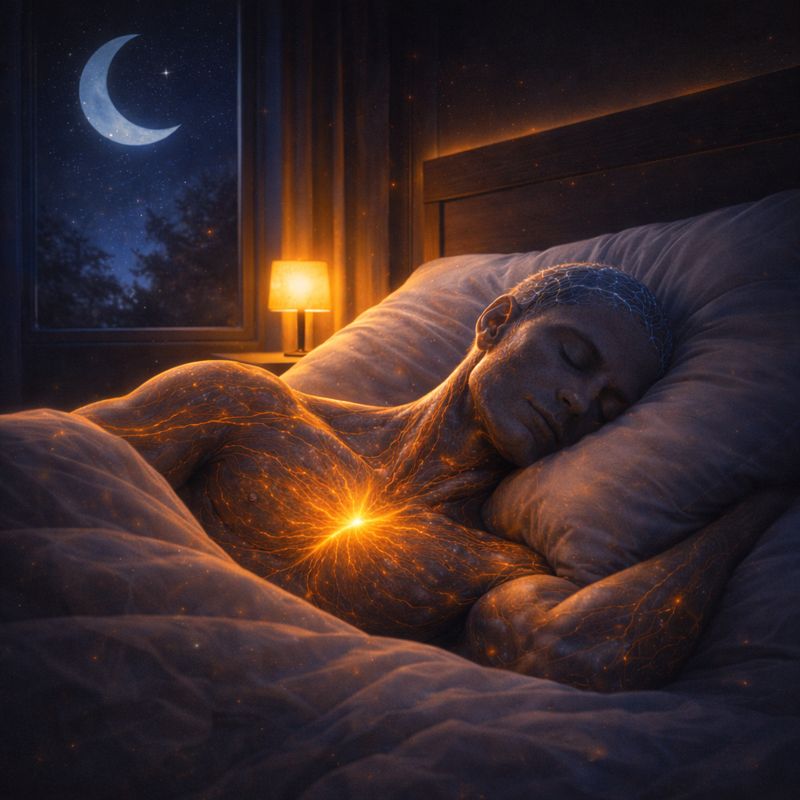
Good sleep doesn’t start when you close your eyes — it starts with your environment.
One of the most overlooked factors in sleep quality is bedroom lighting. Even small amounts of inappropriate light can disrupt melatonin production, delay sleep onset, fragment deep sleep, and reduce overall recovery.
Optimizing bedroom lighting is one of the simplest and most effective ways to improve sleep quality without supplements or medication. This guide explains how light affects sleep, which types of lighting to avoid, and how to design a sleep-friendly bedroom environment aligned with your circadian rhythm.
How Bedroom Lighting Affects Sleep Quality
Light is the strongest external signal influencing your circadian rhythm. When light reaches the eyes at night, it sends a message to the brain that it is still daytime, suppressing melatonin and delaying the body’s natural transition into sleep.
Even low-intensity light can:
- Reduce melatonin secretion
- Delay sleep onset
- Decrease deep sleep duration
- Increase nighttime awakenings
- Reduce morning alertness
Bedroom lighting plays a direct role in whether sleep becomes deep and restorative or light and fragmented.
The Role of Melatonin and Darkness
Melatonin is not a sleep hormone — it is a darkness signal.
Its production rises in the evening when light exposure decreases and peaks during the night in complete or near-complete darkness.
Exposure to artificial light in the bedroom — especially short-wavelength light — interferes with this process. The closer the light source is to the eyes and the later the exposure occurs, the stronger the disruption.
Creating a dark sleep environment allows melatonin to follow its natural rhythm, supporting faster sleep onset and deeper sleep cycles.
Best Types of Bedroom Lighting for Sleep
Warm, Low-Intensity Lighting
Lighting below 3000K (warm white or amber tones) is far less disruptive to circadian rhythm than cool or blue-enriched light.
Recommended options include:
- Warm incandescent-style bulbs
- Amber or red-toned night lights
- Salt lamps or low-lux ambient lighting
Lighting should be dim, indirect, and positioned away from eye level.
Red Light and Sleep
Red light has minimal impact on melatonin suppression compared to blue or white light. For nighttime navigation or reading before bed, red or amber lighting is preferable.
Red light is especially useful for:
- Nighttime bathroom visits
- Reading before sleep
- Maintaining circadian alignment during night awakenings
Lighting to Avoid in the Bedroom
Overhead Ceiling Lights
Bright overhead lighting is one of the most disruptive lighting sources at night. It floods the room with light and directly impacts circadian signaling.
Ceiling lights should be avoided within the last 1–2 hours before bedtime.
Blue and Cool White Light
Light sources above 4000K strongly suppress melatonin and delay sleep timing. These include:
- LED bulbs labeled “daylight” or “cool white”
- Smart bulbs set to default white modes
- Fluorescent lighting
These should never be used in the bedroom at night.
Screens and Light Leakage
Light from phones, tablets, TVs, alarm clocks, and standby LEDs can disrupt sleep even when eyes are closed.
Key steps:
- Remove electronic devices from the bedroom
- Cover LED indicators
- Use blackout curtains to block street lighting
Darkness should be intentional and complete.
How to Set Up a Sleep-Friendly Bedroom Lighting Environment
A circadian-aligned bedroom lighting setup includes:
- No overhead lighting after sunset
- Warm, dim lamps placed below eye level
- No screens in the bedroom
- Blackout curtains or shades
- Optional red or amber night lights for safety
Consistency matters more than perfection. Even partial improvements can significantly enhance sleep quality.
Smart Lighting and Automation for Sleep
Smart lighting can support sleep when used correctly. Automation allows lighting to dim gradually in the evening, reinforcing the body’s natural transition into nighttime physiology.
Effective strategies include:
- Gradual dimming schedules after sunset
- Automatic warm-tone transitions in the evening
- Complete lights-off routines at bedtime
Smart lighting should support circadian rhythm, not override it.
Bedroom Lighting and Long-Term Sleep Health
Chronic exposure to inappropriate light at night has been linked to:
- Insomnia and delayed sleep phase
- Reduced sleep efficiency
- Hormonal dysregulation
- Increased fatigue and cognitive impairment
Optimizing bedroom lighting is a foundational sleep strategy that compounds benefits over time, especially when combined with consistent sleep schedules and morning light exposure.
How Bedroom Lighting Fits Into Circadian Optimization
Bedroom lighting is one part of a larger circadian system. Evening darkness complements:
- Morning sunlight exposure
- Consistent sleep and wake times
- Proper meal timing
- Reduced nighttime stimulation
Together, these signals reinforce a strong circadian rhythm that improves sleep quality naturally.
Next Steps in Sleep Optimization
Once bedroom lighting is optimized, further improvements often come from refining sleep timing, daily habits, and recovery strategies.
Continue exploring the Sleep Optimization framework to build a fully aligned sleep system.
Continue learning about circadian rhythm
TOPIC RELATED: