
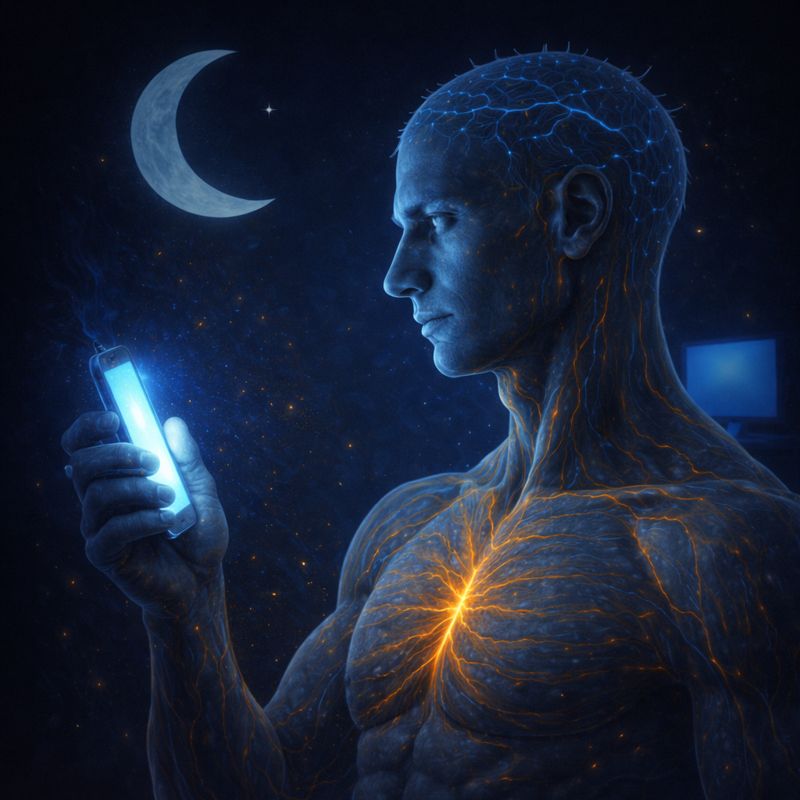
Blue light exposure at night is one of the most common causes of poor sleep quality in modern life. Screens, artificial lighting, and digital devices emit wavelengths of light that interfere with the body’s natural sleep signals, delaying melatonin production and disrupting circadian rhythm.
While blue light exposure during the day supports alertness and focus, nighttime exposure sends the wrong signal to the brain—telling it that it is still daytime. This mismatch can make it harder to fall asleep, reduce deep sleep, and lead to unrefreshing sleep even when total sleep time is sufficient.
Understanding how blue light affects sleep allows you to make simple changes that dramatically improve sleep quality without relying on medication or supplements.
👉 Part of our complete Sleep Optimization framework.
Return to the main guide → /sleep-optimization/
What Is Blue Light?
Blue light is a high-energy, short-wavelength light found naturally in sunlight. During the day, blue light exposure supports alertness, reaction time, and cognitive performance.
At night, however, artificial blue light from screens and indoor lighting interferes with the body’s natural transition to sleep. The problem is not light itself—but light at the wrong time.
How Blue Light Affects Melatonin
Melatonin is the hormone responsible for signaling darkness and initiating sleep. Blue light suppresses melatonin production more strongly than other wavelengths.
Exposure to blue light at night:
- Delays melatonin release
- Shifts circadian rhythm later
- Makes it harder to fall asleep
- Reduces overall sleep quality
Even relatively short exposure in the evening can meaningfully impact sleep timing.
Common Sources of Blue Light at Night
Modern environments contain multiple sources of blue light after sunset:
- Smartphones and tablets
- Computer and TV screens
- LED and fluorescent lighting
- Smart home lighting systems
Prolonged exposure—especially close to bedtime—amplifies circadian disruption.
Why Nighttime Blue Light Is More Harmful Than You Think
The circadian system is highly sensitive in the evening. Exposure to blue light at night has a stronger effect than the same exposure earlier in the day.
Late-night blue light:
- Delays sleep onset
- Reduces sleep depth
- Increases sleep fragmentation
- Contributes to circadian misalignment
This is one reason many people struggle to fall asleep despite feeling physically tired.
How to Reduce Blue Light Exposure at Night
Practical strategies to limit blue light include:
- Dimming indoor lights after sunset
- Avoiding screens 60–90 minutes before bed
- Using warm, low-intensity lighting in the evening
- Enabling night mode or blue light filters on devices
Consistency matters more than perfection. Even partial reduction improves sleep outcomes.
Do Blue Light Blocking Glasses Work?
Blue light blocking glasses can reduce melatonin suppression when used correctly. They are most effective when worn in the evening, especially during screen use.
However, they should complement—not replace—good evening habits such as reduced screen time and dim lighting.
Blue Light vs Overall Light Exposure
While blue light has a disproportionate effect on circadian rhythm, overall light intensity also matters. Bright light of any kind late at night can delay sleep signals.
Optimizing sleep requires both wavelength control and brightness reduction in the evening.
Frequently Asked Questions
How long before bed should I avoid blue light?
Ideally 60–90 minutes before bedtime for optimal melatonin production.
Is night mode enough?
Night mode helps, but it does not fully eliminate circadian disruption.
Does watching TV affect sleep?
Yes. TVs emit significant blue light, especially at close viewing distances.
CONCLUSION
Reducing blue light exposure at night is one of the simplest ways to improve sleep quality. By allowing melatonin to rise naturally, you support circadian rhythm alignment and deeper, more restorative sleep.
Combining evening light control with morning sunlight exposure creates a powerful circadian reset.
Continue learning about circadian rhythm
TOPIC RELATED: