
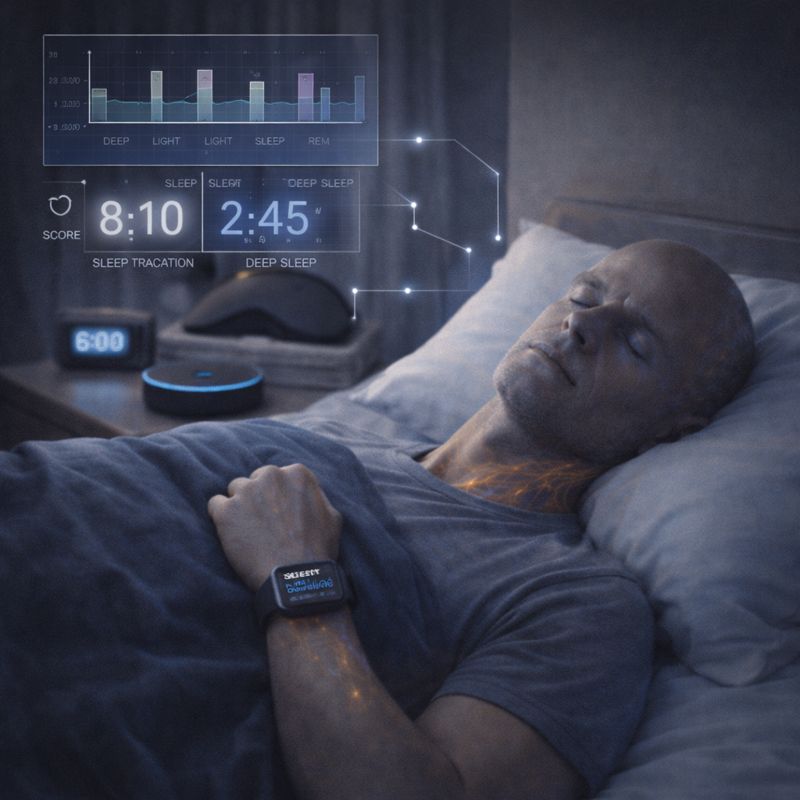
Smart Sleep Technology & Sleep Optimization Tools
Sleep technology can provide valuable insights and environmental control to improve sleep quality—when used correctly. From wearables and trackers to light management and temperature regulation, smart tools can support circadian alignment, deep sleep, and recovery.
The following guides explore the most effective sleep technologies, how they work, and how to use them without disrupting natural sleep processes.
SLEEP TRACKERS & WEARABLES
• Best Sleep Trackers Compared
• Oura Ring vs Whoop for Sleep Tracking
• How Accurate Are Sleep Trackers?
• Can Wearables Improve Sleep Quality?
• Common Sleep Tracking Mistakes
LIGHT MANAGEMENT TECHNOLOGY
• How Blue Light Glasses Work: Technology, Lenses, and Real-World Use
• Smart Lighting for Better Sleep
• Screen Filters and Night Modes Explained
• Light Therapy Devices for Circadian Rhythm
• Red Light vs Blue Light at Night
TEMPERATURE & SLEEP ENVIRONMENT
• Best Bedroom Temperature for Deep Sleep
• Cooling Mattresses and Sleep Quality
• Smart Thermostats and Sleep Optimization
• Hot vs Cold Showers Before Bed
• Temperature Fluctuations and Sleep Disruption
SMART BEDROOM & ENVIRONMENTAL TOOLS
• White Noise Machines and Sleep Quality
• Smart Mattresses: Do They Work?
• EMF Exposure and Sleep Quality
• Air Quality Sensors and Sleep
• Humidity Levels and Sleep Comfort
DATA, METRICS & BIOHACKING TOOLS
• How to Interpret Sleep Data Correctly
• Sleep Scores Explained
• HRV Tracking for Sleep Recovery
• When Sleep Data Becomes Counterproductive
• Using Sleep Metrics Without Anxiety