
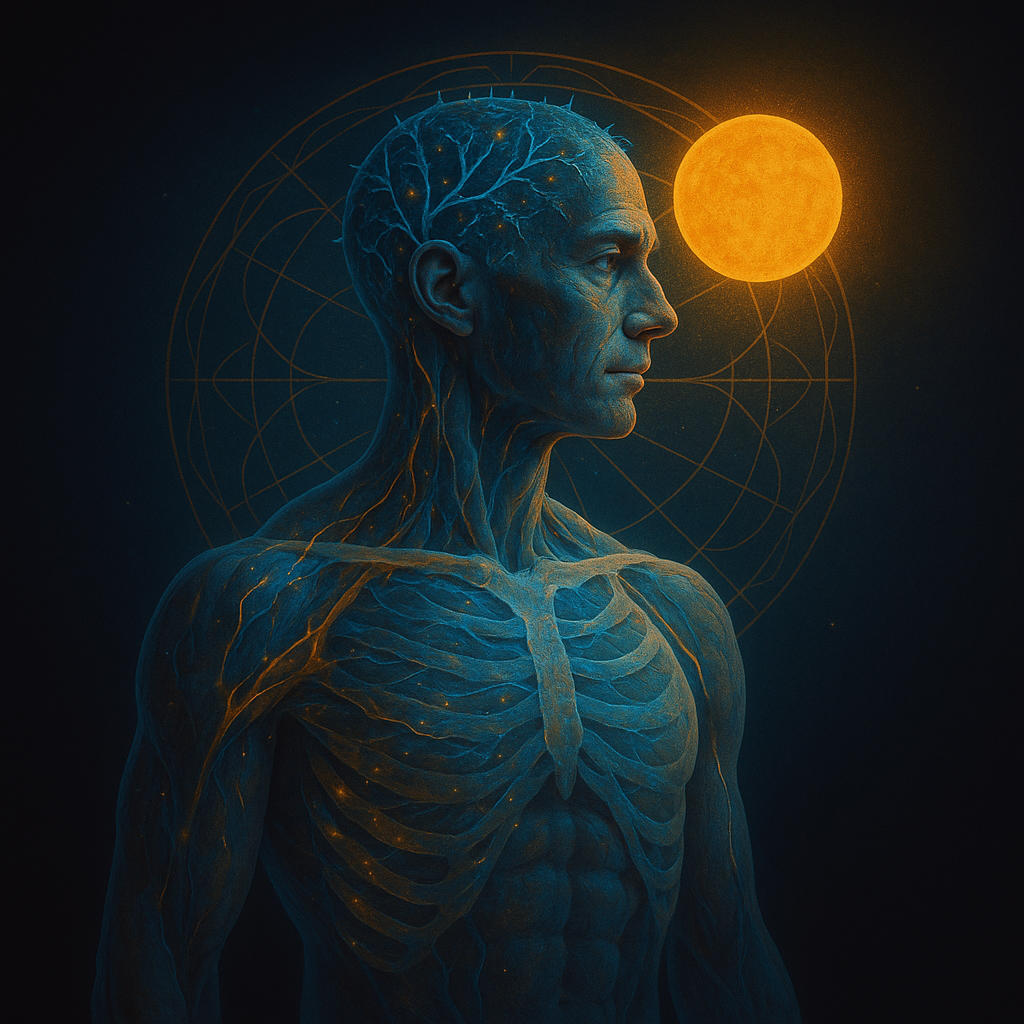
The circadian rhythm is your body’s internal 24-hour clock — a biological timing system that regulates when you feel awake, sleepy, hungry, and alert.
It synchronizes every cell, hormone, and organ with the natural light–dark cycle of the Earth. When this rhythm is aligned, your body performs at its peak. When it’s disrupted, energy, mood, and recovery all suffer.
🌞 The Science Behind the Circadian Rhythm
Your circadian rhythm is controlled by a small region in the brain called the suprachiasmatic nucleus (SCN), located in the hypothalamus.
This “master clock” receives signals from light exposure through your eyes and coordinates hundreds of biological processes — including hormone release, metabolism, body temperature, and even DNA repair.
Morning sunlight tells your brain to suppress melatonin (the sleep hormone) and increase cortisol, helping you wake up energized.
As night falls, light fades, melatonin rises, and your body prepares for sleep.
When this cycle is consistent, you recover faster, focus better, and feel more balanced.
🌙 What Happens When It’s Disrupted
Modern life constantly challenges your circadian rhythm.
Artificial light at night, irregular meal times, late workouts, caffeine, and screen exposure all send mixed signals to your internal clock.
This misalignment — known as circadian disruption — can lead to fatigue, poor sleep quality, insulin resistance, low testosterone, and even premature aging.
Your body doesn’t adapt well to chaos.
Even small inconsistencies in bedtime or light exposure can confuse your brain, weaken recovery, and reduce cognitive performance.
⚡ How to Reset and Optimize Your Circadian Rhythm
Re-aligning your internal clock doesn’t require magic — just consistency and smart habits.
1. Get morning sunlight exposure within the first 30 minutes of waking.
Natural light is the most powerful cue for your brain to set its internal timer.
2. Limit blue light at night.
Use warm lighting or blue-light filters two hours before bed to allow melatonin to rise naturally.
3. Keep regular sleep and wake times.
Your body thrives on routine — even on weekends.
4. Eat and train according to daylight.
Avoid heavy meals or intense workouts right before bed; both delay melatonin release.
5. Sleep in complete darkness.
Even small light leaks can suppress melatonin and fragment deep sleep.
🧠 Why It Matters
Optimizing your circadian rhythm isn’t just about better sleep — it’s about unlocking total biological efficiency.
When your body clock is synchronized, hormones stay balanced, focus sharpens, recovery accelerates, and your energy becomes consistent throughout the day.
For high performers and biohackers alike, mastering the circadian rhythm is the foundation of sleep optimization, longevity, and peak mental clarity.